No one can forget Steve Jobs masterful launch of the iPhone. “Today, we’re introducing three revolutionary products” he said – “a widescreen iPod with touch controls, a revolutionary mobile phone, and a breakthrough internet communications device.” Jobs then repeated the three products a few times: “An iPod, a phone, an internet communicator…”. And then he made the revelation “Are you getting it? These are not three separate devices. This is one device. And we are calling it iPhone.”
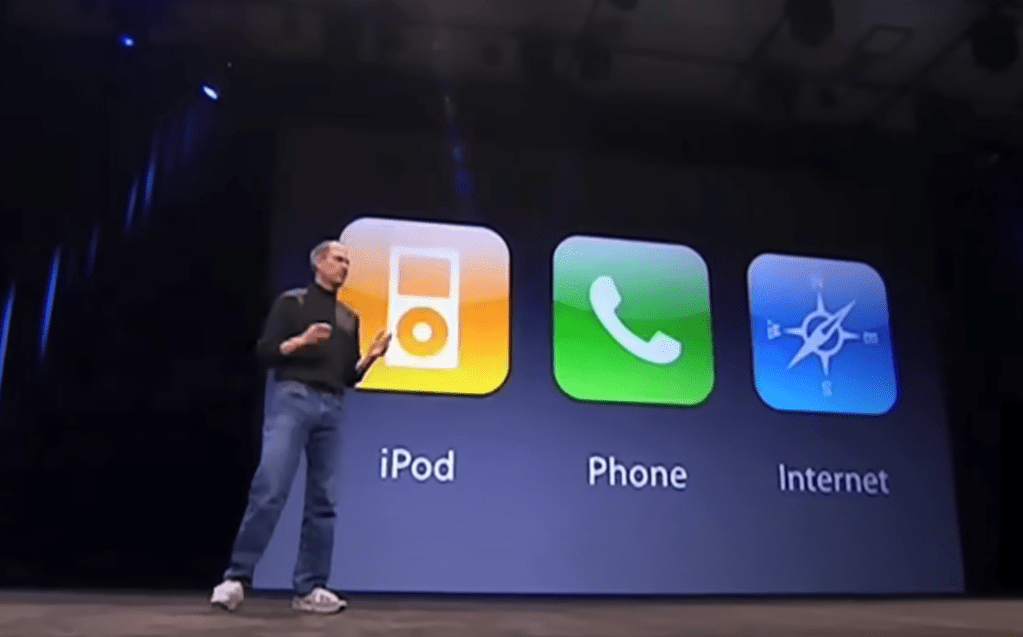
It was an iconic moment. The iPhone – three products rolled into one – changed everything in the cell phone industry. While perhaps not the best parallel, I somehow remembered it while writing this article. I am writing on a similar theme – an all-important ‘product’ which is actually three rolled into one – the teacher.
Teaching
Across most of school and junior college (high school), my concept of a teacher was simply the one who teaches or gives instruction. There were average teachers, who couldn’t hold our attention due to whatever reason – deficiency in content, enthusiasm, or aura; good teachers, who usually gave excellent exam-oriented lectures and clarified concepts without making us feel sleepy; and a handful of extraordinary teachers, whose lectures I truly looked forward to because they inspired me to think and do beyond what was in the textbooks. Drona is probably the quintessential Indian example of an exceptional teacher.
I got exposed to some extraordinary teachers during my medical training. My alma mater KEM had a lot of excellent teachers who demonstrated both theoretical and practical acumen, patiently simplified concepts for us, answered queries, and often went out of their way to take clinics and teach. I have fond memories and anecdotes of many a great teacher which still feel as fresh as yesterday.
Many of the basics and good practices ingrained in me as a doctor are thanks to my phenomenal teachers, and I remain perennially indebted to them for that. However, once you complete medical training, you realize that becoming an MD is only the beginning. There are innumerable questions and doubts hovering in your mind about what to do next, and how. I experienced the same, and I realized that I needed someone more than a teacher – I needed a guide, or a mentor.
Mentoring
The Oxford dictionary meaning of ‘mentor’ is ‘an experienced person who advises and helps somebody with less experience over a period of time.’ But the best definition of mentor that I have come across is by Suzanne Koven, who defines a true mentor as someone who has more imagination about you than you have about yourself, i.e. s/he recognizes your potential better than yourself.
After my MD was over, I was confused about doing a fellowship abroad vs working in a good institute in Mumbai for further training. I wasn’t sure what would be the right path for me. After a lot of agitating and asking around, I decided to approach my HOD Dr Ravi Ramakantan. He asked me to give him a few days to think, ask around, and get back. After two days, he called me and said in a single line – “Akshay, you should go to the US for further training”. And that did the trick. I felt that I did not need to ponder about any longer. I immediately started preparing for USMLE, and can now state with certainty that it was the perfect choice for me. That probably is the highest level of mentorship – someone whom you can trust blindly to give you appropriate advice. Mahabharat again illustrates the perfect mentor – Krishna. While never their teacher, he indeed became a mentor to Arjun and the entire Pandav clan, and inspired them to victory. The Gita and the 18-day battle that ensued is the ultimate example of the mentee Arjun religiously following the mentor Krishna’s advice.
The US has in a sense institutionalized mentorship. While the concept of mentorship was never formally introduced to me during my medical training in India, it is common parlance over there. Mentorship is something expected out of every academic, and which they do with pride and happiness. My three years in the US led me to firsthand experience the advantages of having great mentors, who truly pushed me beyond my boundaries. They often gave tremendous opportunities and guidance, be it writing Radiology Clinics articles, making me a reviewer and later journal editor, or even inviting me for treks or home for dinner. I often wondered whether I really deserved them, only to subsequently be able to form strong bonds with them and successfully fulfil and often exceed expectations under their guidance.
After I returned back to India, I have tried my best to be a good teacher and mentor. Each is an extremely fulfilling role. However, while I felt privileged to have the opportunity to be both, I still felt something lacking in terms of impact. I started realizing the limitations of this two pronged approach – it wasn’t the magic bullet I had expected it to be. Interactive teaching is time consuming while teaching larger audiences in didactic talks can only go so far. Vis-à-vis mentorship, it can only happen if someone approaches you, something not still routine in India as the concept of approaching mentors remains foreign to many. Furthermore, both the mentor and the mentee need to connect well and give time to each other; the relationship should not just be transactional. And the scope of mentorship is usually limited to professional and academic practice – what to do next, what research project to work on etc.
One product was still missing, so to speak. Or rather, it wasn’t recognized by me.
Role-modelling
Along the years, as I reflected over my training across different institutes and at Tata as faculty, I slowly recognized this third overarching component. To make it easier to illustrate, let me give my own example. I work as an oncoradiologist for patients with essentially three types of cancers – GI / HPB, gynecological and pediatric tumors. I have been lucky to have had many expert teachers who have taught me. However, most of the people who have shaped me or inspired me to reach this position did not really teach me anything closely related to what I currently practice. Ravi Sir taught me plain radiographs and fluoroscopy. Dr Bhavin Jankharia taught Chest and MSK. I rarely discuss my areas of focus when I meet my US faculty and mentors at RSNA. Similarly, many of the Tata colleagues and senior faculty I get inspiration from are from outside my department, and many do not even treat the cancers I focus on (they may be working in surgery, medical oncology or nuclear medicine for example).
And yet, I believe that I owe most to these people. Not because of what they taught me or what they saw in me, but because of what I saw in them. They became my role models to emulate. What I imbibed most from Ravi Sir, for example, was his integrity and simplicity and the way he treated patients with dignity and empathy. Similarly, my first few months in KEM radiology were amidst extraordinary people like Dr Darshana Sanghvi (neuroradiology), Uday Limaye (neuro intervention), Abhijit Raut (body imaging) and Padma Badhe (fluoroscopy). More than radiology, what I learnt from them was sincerity and work ethic, demonstrating kindness and approachability to trainees, and humility. Across the years, many of my mannerisms, the way I interact with other radiologists and oncologists, my focus over the language of a radiology report, are me consciously or unconsciously modelling my behaviour and attitude on such role models. On the other hand, we have all seen excellent doctors and teachers who however lack compassion to patients or who are petty or condescending to colleagues and juniors in the department; we do not remember them with the same level of fondness or reverence despite their good clinical acumen and teaching skills. This is because they were bad role models.
Role-modelling is probably the most crucial of the three elements to create good doctors, and more importantly, good human beings. While our immediate focus during training remains on gaining direct skills and knowledge, we also subconsciously imbibe the personalities and ethos of the teachers around us. In a sense, the direct teaching impacts our left brain while role-modelling moulds our right brain.
Steven Spielberg’s brilliant ‘Saving Private Ryan’ involves Tom Hanks eventually dying while trying to save Matt Damon (Private Ryan) in World War II. It ends with a moving scene of an old Matt Damon at Hanks’ grave, hoping that he had led a good life and had earned the sacrifices made by others to get him back home alive. A good role model will make you feel the same when you meet him/her years later. You will feel the desperate urge to earn his or her nod of approval at how you have practiced medicine and lived your life.
I started with an obtuse allegory to the iPhone. Let me end with a more relatable one. The number three is holy in Indian mythology. The Trinity or Trimurti take care of the world – Brahma, Vishnu and Mahesh. During the Kumbh, the Triveni Sangam or the confluence of Ganga, Yamuna and the mythical Saraswati is a holy place, with a dip in it sufficient to wash off all sins. The same way, someone who successfully teaches, mentors and becomes a good role model attains a sacred place in the lives of many trainees as a true teacher – one who shaped their knowledge, career, and character.
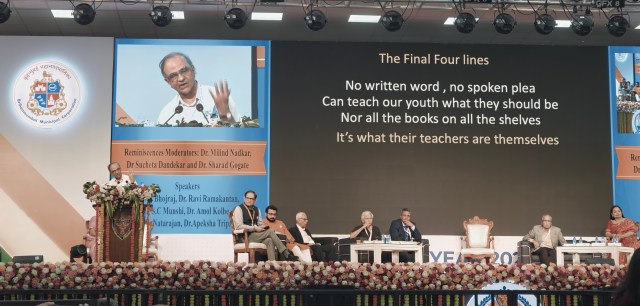
I end with the lines by an anonymous poet quoted by Ravi Sir recently when he spoke during the KEM Centenary celebrations, which illustrate the power of our actions and our behaviour.
‘No written word, no spoken plea,
Can teach our youth what they should do,
Nor all the books on all the shelves,
It’s what their teachers are themselves’
– Akshay Baheti
PS: The term ‘teacher’ itself is perhaps limited in scope – it by definition is simply someone who teaches. It thus doesn’t allow us to imagine its impact, and leaves us to figure it out slowly by ourselves. The Hindi word guru is far more appropriate – it conveys the enormity and the impact of being a teacher much better; I cannot find a similar equivalent in English. I had written something on what the word ‘guru‘ means long back during my radiology residency – sharing it here.
 Cafe Roentgen
Amazing, thoughtful writing Akshay! Well done!
LikeLiked by 1 person